About TechCarbonWorks
TechCarbonWorks is a custom carbon fiber parts manufacturer founded in 2005 in Dongguan, China, and we have spent nearly two decades building one of the most complete composite fabrication operations in the Pearl River Delta. We serve engineering teams and sourcing managers across the United States, Europe and Australia who need high-performance carbon fiber components built to print, to tolerance and to schedule. Unlike brokers who resell parts made by unknown subcontractors, we own the entire manufacturing chain: tooling design, mold making, prepreg layup, autoclave curing, CNC machining and final inspection all happen under one roof.
When you specify a custom carbon fiber part, you are really specifying a system of material, process and quality discipline. A component that looks correct on the outside can fail in service if the fiber volume fraction is wrong, the cure cycle was off, or the layup sequence introduced hidden voids. That is why our customers choose a vertically integrated custom carbon fiber parts manufacturer rather than juggling multiple vendors. We take responsibility for the outcome from the first laminate ply to the final dimensional report.
Our facility in Dongguan was purpose-built for composite production. It includes a temperature- and humidity-controlled prepreg layup clean room, a fleet of autoclaves sized for both small brackets and large structural panels, a 3-axis and 5-axis CNC machining center dedicated to trimming and drilling cured laminates, and a metrology room with coordinate measuring machines. Because we control these resources directly, we can quote honestly, protect lead times during demand surges, and trace every lot of material back to its certificate of conformance.
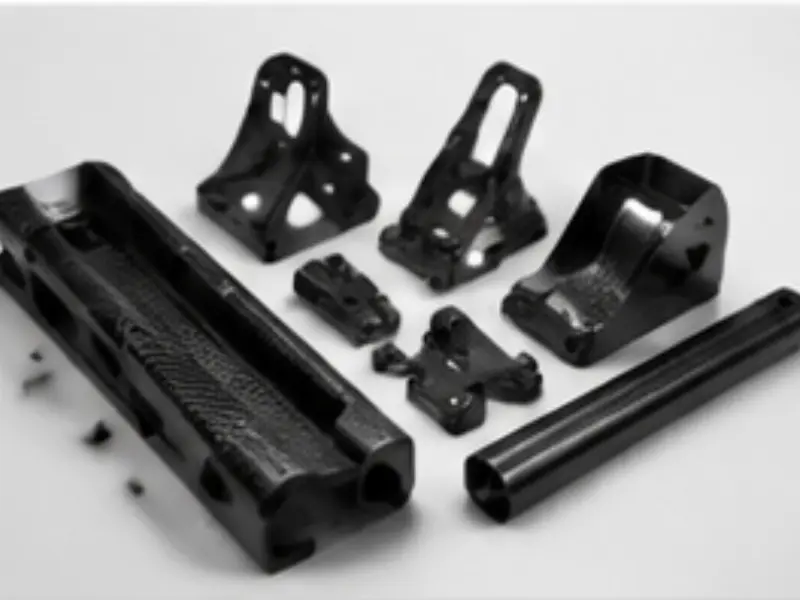
Custom carbon fiber components ranging from brackets and enclosures to structural panels, all built to customer print.
From the beginning, our philosophy has been to act as an extension of our customers’ engineering departments. Many of the programs we run started as a rough sketch on a napkin and grew into production volumes of tens of thousands of parts per year. We have supported drone airframes, aerospace secondary structures, motorsport aero devices, medical imaging equipment, and industrial robotics arms. In every case the success factor was the same: a custom carbon fiber parts manufacturer that understood the engineering intent, not just the geometry.
We are proud of our global footprint. Roughly half of our output ships to North America, with strong demand from Europe and a fast-growing base in Australia. We quote in multiple currencies, handle export documentation, and work to Incoterms that suit each customer, whether that is EXW Dongguan, FOB Shenzhen, or DDP to a warehouse in Germany or Illinois. Our team is fluent in the documentation and quality expectations that Western OEMs require, and we treat a clean first-article package as a non-negotiable deliverable.
Our Carbon Fiber Manufacturing Capabilities
As a custom carbon fiber parts manufacturer, our capability stack is organized so that a single program can move from concept to volume without leaving our building. The core capabilities include:
- Engineering and tooling design — we review customer CAD, recommend draft, radii and datum strategy, and produce mold drawings.
- Mold making — CNC-machined aluminum and steel tools, composite tooling for prototypes, and soft tooling for low-volume runs.
- Prepreg layup — hand layup of Toray T300, T700 and T800 prepreg in twill, plain and unidirectional formats.
- Curing — vacuum bagging for non-critical parts and autoclave curing for aerospace-grade laminates.
- CNC machining — 3-axis and 5-axis trimming, drilling and pocketing of cured parts to tight tolerances.
- Secondary operations — bonding, insert installation, painting, clear coat, screen printing and assembly.
- Inspection — incoming material checks, in-process audits, CMM measurement and first-article reporting.
This breadth matters because carbon fiber is unforgiving. A part that machines cleanly but was poorly cured will delaminate under load; a perfectly cured part with the wrong fiber orientation will not meet stiffness targets. By keeping every step in-house, we eliminate the hand-offs where quality and schedule risk accumulate. For customers, this vertical integration also means a single point of accountability: when a tolerance, finish or schedule question arises, it is answered by the team that actually built the part rather than a trading company relaying messages between anonymous factories. That accountability is the practical difference between merely buying carbon fiber components and partnering with a custom carbon fiber parts manufacturer who owns the outcome.
Core Manufacturing Processes
A serious custom carbon fiber parts manufacturer must master several distinct processes, because no single method fits every geometry, volume and performance requirement. We deploy the following:
Prepreg Molding
Prepreg molding uses fiber pre-impregnated with resin at the supplier and stored frozen until use. Because the resin content is precisely controlled at the prepreg stage, we achieve consistent fiber volume fractions and low void content. Prepreg is the foundation of our aerospace and motorsport work where repeatability is critical.
Hand Layup
For complex contours, large panels and low-volume runs, our technicians perform hand layup in a controlled clean room. Each ply is cut on a CNC table from nested patterns, debulked between layers, and oriented exactly to the laminate schedule. Hand layup gives us the flexibility to integrate local reinforcements, cores and inserts in a single build.
Vacuum Bagging
Every prepreg and wet layup part is enclosed in a vacuum bag with breather and release materials. Pulling vacuum removes entrapped air and compacts the laminate, dramatically reducing voids versus ambient-pressure curing. For many industrial and drone components, vacuum bagging plus oven cure delivers excellent results at lower cost than autoclave processing.
Autoclave Curing
For the highest performance laminates we cure in an autoclave under both vacuum and elevated pressure, typically 6 to 7 bar. The combination of heat and pressure consolidates the laminate, drives void content below one percent, and produces the mechanical properties engineers specify for structural applications. Our autoclave cycle is documented per resin system and logged for traceability.
CNC Machining
Cured carbon fiber is abrasive and demands rigid, well-damped machines with diamond-coated tooling and effective dust extraction. Our 3-axis and 5-axis centers trim nets, drill holes, and machine pockets referenced to datums established during molding. Tight-tolerance features that cannot be molded are always machined, which is why we treat CNC as a first-class process rather than an afterthought.
Mold Making
Tooling quality defines part quality. We machine molds from aluminum for production and from composite or soft materials for prototypes, and we validate every mold with a first-article before release. Good mold design also accounts for cure shrinkage, draft and parting line so that finished components meet print without rework.
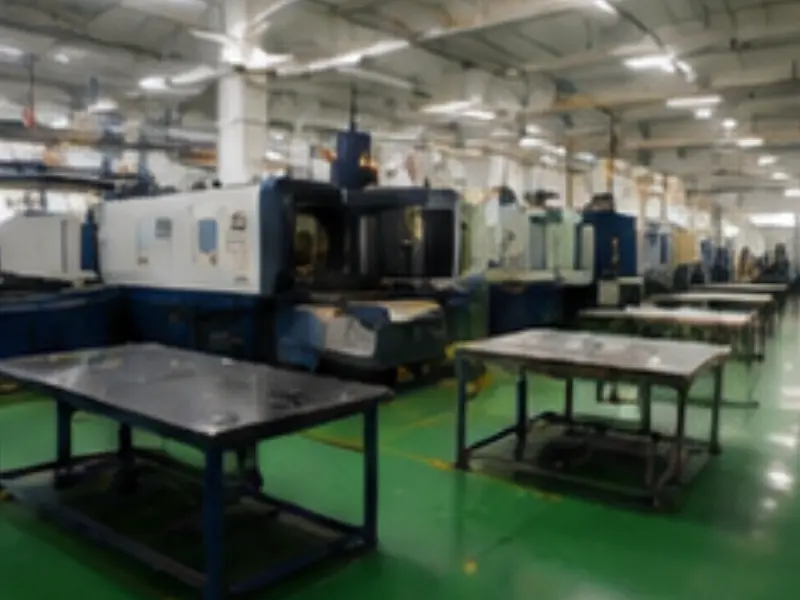
Our Dongguan factory floor integrates mold making, prepreg layup, autoclave curing and CNC machining under one roof.
Material Selection
Choosing the right material is the first engineering decision in any program. Our standard catalog includes:
| Material | Typical use | Key property | Surface |
|---|---|---|---|
| Toray T300 prepreg | General structural parts | Proven, cost-effective | Matte/satin |
| Toray T700 prepreg | High-strength brackets | Higher tensile strength | Gloss/satin |
| Toray T800 prepreg | Lightweight structures | Highest strength-to-weight | Gloss |
| 3K twill weave | Visible cosmetic parts | Classic carbon look | Gloss |
| 3K plain weave | Flat panels | Stable, uniform | Gloss/satin |
| Forged carbon | Organic shapes | Isotropic, design freedom | Raw/clear |
| Carbon-kevlar hybrid | Impact zones | Toughness + stiffness | Yellow weave |
All prepreg is stored in a -18C cold room and tracked by lot so we can provide full material traceability. When a customer needs a specific resin system, fire-retardant chemistry or recycled content, we qualify it through a documented trial before production.
Industries We Serve
As a custom carbon fiber parts manufacturer with worldwide reach, we support a broad cross-section of industries:
- UAV and drone systems — airframes, arms, payload mounts and landing gear where weight savings extend flight time.
- Aerospace — secondary structures, brackets, fairings and interior panels built to aerospace laminate schedules.
- Motorsport — aero devices, intake ducts and structural panels where stiffness and weight dominate lap times.
- Medical — imaging equipment frames and ergonomic housings requiring dimensional stability.
- Industrial robotics — lightweight arms and end-effectors that improve payload and cycle speed.
- Consumer and sporting goods — premium shells, frames and accessories where appearance matters.
Each industry carries its own compliance and documentation expectations, and our quality system is built to satisfy them. We regularly support customers who must demonstrate material origin, process control and full inspection evidence for regulated programs.
Quality and Certifications
Quality is not a department at TechCarbonWorks; it is the operating system of the whole plant. We are ISO 9001 certified and maintain documented procedures for incoming inspection, process control, nonconformance handling and corrective action. Our inspection room uses coordinate measuring machines to verify critical dimensions, and we supply a first-article inspection report with every new tool release.
For engineering buyers, the practical benefit is predictability. When a print calls for plus or minus 0.1 mm, our report shows that we measured it. When a laminate schedule calls for a specific ply sequence, our build record proves it was followed. This discipline is what allows a custom carbon fiber parts manufacturer to serve safety-critical programs across the US, Europe and Australia without constant on-site auditing.
Process Comparison for Buyers
Sourcing managers often ask which process fits their program. The table below summarizes the trade-offs we discuss during quotation.
| Process | Best for | Tolerance | Tooling cost | Lead time |
|---|---|---|---|---|
| Hand layup + vacuum bag | Large, low-volume parts | ±0.3 mm | Low | 2-4 weeks |
| Prepreg + autoclave | Structural, high-performance | ±0.15 mm | Medium | 4-6 weeks |
| CNC machining from plate | Flat, net-feature parts | ±0.05 mm | None | 1-2 weeks |
| Molded + CNC trim | Production volumes | ±0.1 mm | Medium-High | 4-6 weeks |
The right answer depends on volume, performance and budget. We help customers choose the leanest process that still meets the engineering requirement rather than overselling the most expensive option.
Why Engineering Teams Choose Us
We have refined our operation around the things that matter to technical buyers: honest tolerances, traceable materials, responsive engineering support, and dependable export logistics. A custom carbon fiber parts manufacturer is only as good as its last shipment, so we invest in the unglamorous parts of the business — documentation, training, calibration and communication — that keep programs running.
Our team collaborates with customer engineers on design for manufacturability, suggesting changes that reduce cost or risk without compromising function. We prototype quickly, validate thoroughly, and scale into production with a controlled ramp. This is how a relationship that begins with a single bracket can grow into a multi-year supply partnership.
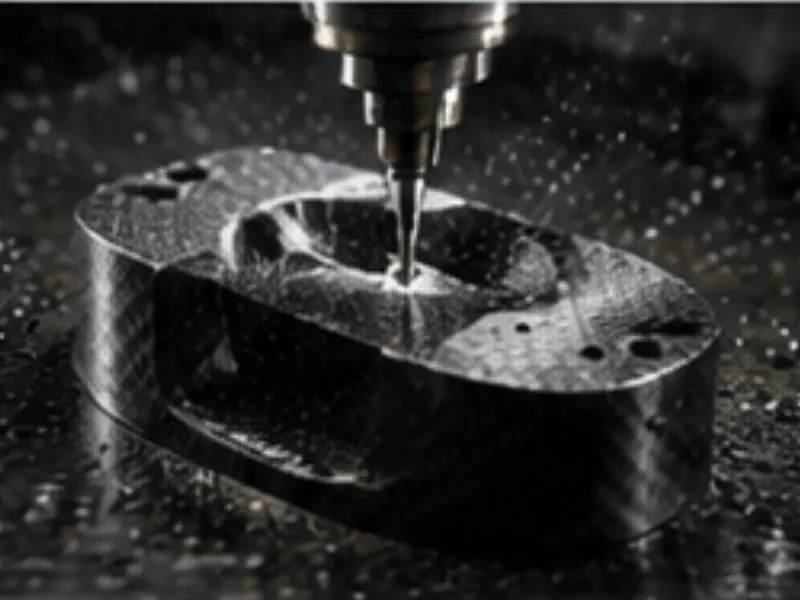
5-axis CNC machining of cured carbon fiber components to tight tolerances using diamond-coated tooling.
Dimensional Control and Tolerance Strategy
Holding tolerance on a composite part is different from machining metal, because the molded surface carries the nominal geometry while trimmed and drilled features carry the critical datums. Our standard approach establishes machined datum faces on every production tool so that CMM inspection references a stable, repeatable origin rather than a cosmetic surface. For bonded assemblies we control bond-line thickness with shims and fixture pressure, and we verify flatness and warpage on a granite table before secondary operations. Where a program requires plus or minus 0.05 mm on a contoured edge, we machine that edge on the 5-axis center rather than relying on the mold, and we record the tool path and wear offset in the build file. This disciplined separation of molded versus machined tolerance is why our parts assemble cleanly on customer lines in the US, Europe and Australia without field rework.
Engineering and DFM Support
For a custom carbon fiber parts manufacturer, some of the most valuable work happens before any material is cut. Our engineering team engages at the quotation stage to review customer CAD against the realities of composite fabrication. Carbon fiber does not behave like aluminum or steel: it springs back from the mold, it cures with measurable shrinkage, and it resists tight inside radii. We therefore run a structured design for manufacturability (DFM) review on every new program. During this review we assess draft angles, minimum wall thickness, corner radii, datum strategy and the locations where features must be machined rather than molded. Where a geometry will be difficult or expensive to produce, we propose alternatives that preserve function while improving yield and reducing risk. Because our mold makers and laminators sit next to our engineers on the same floor, the DFM feedback loop is measured in hours rather than weeks, and customers receive a documented set of recommendations instead of a vague warning that a part “may be hard to make.”
We also support customers who arrive with only a concept. Our engineering group can translate a sketch, a scanned reference part or a competitive sample into a manufacturable laminate schedule and a 3D model with appropriate composite allowances. For programs that demand formal documentation, we produce first-article packages that include ballooned drawings, measurement plans and process flow diagrams. This upstream engineering discipline is one of the main reasons sourcing managers treat us as a custom carbon fiber parts manufacturer rather than a simple job shop: we lower the risk that a program reaches production tooling before the design itself is proven.
Quality Assurance Workflow
Quality at TechCarbonWorks follows a closed loop that begins before a part is built and ends only after a coordinate measuring machine confirms the final geometry. We organize this loop into three distinct phases: incoming prepreg quality control, in-process verification, and CMM final inspection. Each phase is documented, and the records travel with the shipment so a customer can reconstruct exactly how a part was made.
The first phase starts in our -18C cold room. Every lot of prepreg is checked against its certificate of conformance on arrival: we verify resin content, areal weight, allowable out-time and freezer lot identity before the material is accepted into production. Prepregs that exceed allowable out-time or show signs of premature tack are rejected outright. This incoming gate protects every downstream step, because no amount of careful layup can recover a material that was already out of specification.
The second phase covers the build itself. Our laminators debulk each laminate and record the actual ply sequence against the approved schedule. Autoclave and oven cures are logged with time, temperature and pressure traces so that the exact thermal history of every batch is archived for traceability. In-process audits confirm bagging integrity, vacuum levels and tool condition. For bonded assemblies we document bond-line preparation, adhesive lot and fixture pressure so the joint can be reproduced lot to lot.
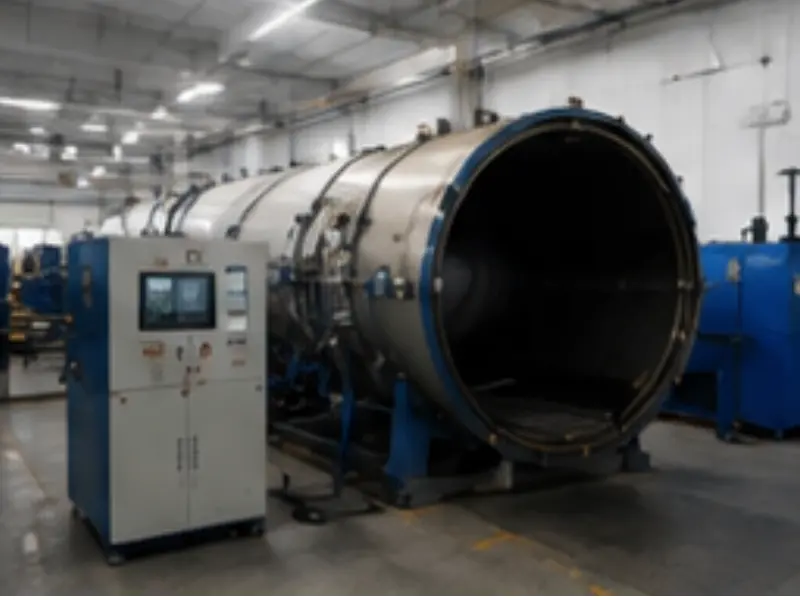
Autoclave curing under vacuum and elevated pressure consolidates the laminate and drives void content below one percent for structural-grade parts.
The third phase is final verification. Critical dimensions are measured on coordinate measuring machines referenced to the machined datum faces we establish on every production tool. We compare results to the ballooned drawing and generate a first-article inspection report for new tool releases, plus routine inspection reports for production lots. Any nonconformance is quarantined, root-caused and dispositioned through a documented corrective-action process. The outcome is a custom carbon fiber parts manufacturer whose shipments can be received and assembled with confidence on customer lines in the US, Europe and Australia.
Surface Finishing Options
The visible and functional surface of a carbon part is as important as its internal structure, particularly for consumer, motorsport and medical programs. We offer a range of finishing paths so that engineering teams can match appearance, abrasion resistance and cost to the application.
| Finish | Process | Appearance | Best for |
|---|---|---|---|
| Raw / clear coat | Sealed, no pigment | Natural woven look | Cosmetic structural parts |
| High-gloss paint | Multi-stage paint plus clear | Show-car finish | Consumer, motorsport |
| Matte / satin | Low-sheen topcoat | Understated | Industrial, medical |
| Screen print / logo | Pad or screen transfer | Branded markings | Enclosures, panels |
| Abrasion-resistant coat | Hard urethane layer | Tough, textured | Wear surfaces |
| Bonded inserts / bushings | Structural adhesive | Functional hardware | Mounting points |
Beyond cosmetics, finishing protects the laminate. A properly applied clear or paint system slows moisture uptake, resists UV yellowing and hides minor surface porosity. When a program requires a specific color match or chemical-resistance profile, we qualify the coating through a controlled trial and lock the process parameters so production remains repeatable. For teams planning early-stage validation, our carbon fiber prototyping services page describes how finishes are qualified alongside the base laminate.
Cost Drivers of Carbon Fiber Parts
Many sourcing managers ask why two seemingly similar carbon parts can carry very different prices. The answer lies in the cost structure of composite manufacturing, which is dominated by labor, tooling and material rather than by machine time alone. The table below summarizes the main cost levers we discuss during quotation.
| Cost driver | How it affects price | How to control it |
|---|---|---|
| Tooling | Aluminum or steel molds are a fixed upfront cost | Use soft tooling for prototypes, amortize over volume |
| Material grade | T800 and hybrids cost more than T300 | Specify only the grade the design requires |
| Part complexity | Multi-ply, contoured layups add labor | Simplify the ply book where stiffness allows |
| Machining | 5-axis trim and drilling add time | Maximize molded features, minimize post-machining |
| Secondary ops | Bonding, inserts, paint increase steps | Combine operations, limit paint to visible areas |
| Volume | Low volumes spread tooling thin | Plan annual demand to reach economic batches |
| Inspection level | CMM and FAIR add cost | Use tiered inspection for non-critical parts |
As a custom carbon fiber parts manufacturer, our role is to help customers find the leanest configuration that still meets the engineering requirement. We would rather propose a less expensive process that satisfies the print than default to the most capable and most costly one. This transparent approach to cost is part of why engineering teams return to us for follow-on programs.
Sustainability and Material Handling
Composite manufacturing carries a reputation for waste, and we take that responsibility seriously. Our prepreg is cut on a CNC nesting table that optimizes ply layouts to minimize offcuts, and we maintain a cold-chain handling procedure so that material is thawed, used and logged without exceeding out-time limits. Offcuts and trimmings are segregated and routed to approved recyclers where local infrastructure allows. Scrap laminate from nonconforming parts is tracked so that we can correlate yield losses back to specific process steps and improve them over time.
We also pay attention to the chemicals in our process. Vacuum bagging films, release agents and solvents are selected for lower environmental impact where performance permits, and our layup clean room uses filtered extraction to protect both technicians and air quality. For customers with sustainability mandates, we can document material origin, recycled-content options and our handling procedures as part of the program file. A responsible custom carbon fiber parts manufacturer should be able to answer these questions, and we build that evidence into our standard records rather than producing it only on request.
Global Logistics and Packaging
Exporting precision composite parts is a discipline in its own right. Cured carbon fiber is light but brittle at edges, and a poorly packed shipment can undo weeks of careful manufacturing. We engineer packaging per part geometry: custom foam cavities, rigid corrugated or plywood cases, edge protection and desiccant for humidity-sensitive destinations. For large or high-value orders we use reusable transit frames that customers can return, reducing both cost and waste.
On the logistics side, we quote to the Incoterms that suit each program, from EXW Dongguan to DDP at a customer warehouse in Germany or Illinois. We prepare export documentation, commercial invoices, packing lists and material certificates so that customs clearance proceeds without delay. Our team coordinates with freight forwarders experienced in composite and aerospace shipments, and we track consignments to destination. Because we act as a single accountable custom carbon fiber parts manufacturer, there is no finger-pointing between a mold shop, a curing subcontractor and a shipper — one supplier owns the outcome from ply to port. Further background on our export practices appears on the carbon fiber manufacturing blog at our main site.
From Prototype to Production: A Case Walkthrough
To make the above concrete, consider a representative program: a UAV payload bracket that must be light, stiff and reproducible at volume. The customer arrived with a CAD model and a target weight. Our engineering team ran a DFM review and identified two inside radii that would be impossible to mold cleanly; we opened them slightly and moved two mounting holes to machined features. We then built a CNC-machined soft tool and ran three prototype iterations in two and a half weeks, validating fit on the customer airframe.
With the design proven, we produced an aluminum production mold and qualified it with a first-article inspection. The laminate used Toray T700 twill prepreg with localized unidirectional reinforcement at the load points. Cure was logged in the autoclave, and final trimming plus hole drilling were completed on the 5-axis center referenced to machined datums. The first production batch of two hundred brackets shipped in five weeks with a full inspection report. Twelve months later the program runs at several thousand parts per year with stable yield. This arc — sketch, DFM, prototype, qualified tool, production, scale — is exactly what a vertically integrated custom carbon fiber parts manufacturer is built to deliver.
Related Capabilities
If your program spans more than one process, explore our dedicated service pages. Our carbon fiber manufacturing services overview explains each process in detail, while the custom carbon fiber parts manufacturer page focuses on build-to-print production. For trimmed and drilled features, see CNC machining of carbon fiber parts, and for early-stage validation review carbon fiber prototyping services. We also offer dedicated carbon fiber mold making and industry pages for UAV, aerospace, motorsport and robotics applications.
Start Your Project
If you are evaluating a custom carbon fiber parts manufacturer for an upcoming program, we welcome the conversation. Send your drawings, target volumes and performance requirements, and we will return a transparent quotation with a realistic lead-time schedule. Our engineers are happy to review design for manufacturability before you commit to tooling.
For a direct technical discussion, contact Hank at [email protected]. You can also learn more on our main site at TechCarbonWorks or read process deep-dives on our carbon fiber manufacturing blog. Since 2005 we have helped teams in the US, Europe and Australia turn carbon fiber concepts into reliable, lightweight production parts — and we look forward to supporting your next build.