Understanding how carbon fiber parts are made helps B2B buyers set realistic lead times, budgets, and quality expectations. The journey from a rolled sheet of prepreg to a finished, inspected component is a tightly controlled sequence of material handling, hand craftsmanship, and precision machining. At TechCarbonWorks our Dongguan facility runs this workflow daily for aerospace, robotics, motorsport, and UAV clients. This article follows a part through every stage so you can spec, source, and plan with confidence.
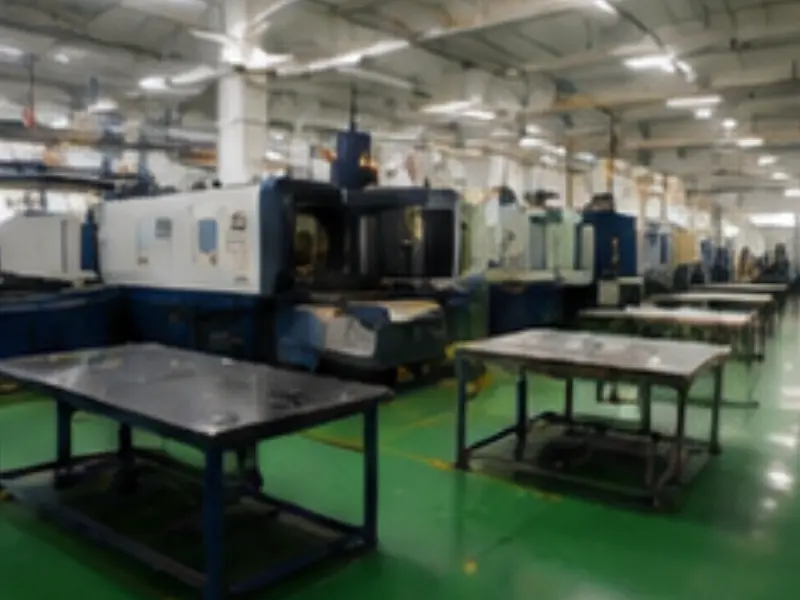
Controlled environment layup is the foundation of a consistent, low-void laminate.
Material storage and freezer management
Carbon fiber prepreg is a time- and temperature-sensitive material. It ships frozen, typically at minus eighteen degrees Celsius, because the resin system is partially cured and will advance if warmed. On arrival we log each roll into a freezer inventory with its gel time and out-life. Before use, prepreg is thawed in sealed bags to prevent condensation, then brought to layup temperature. Mishandling here causes sticky, unusable material and scrapped production, so freezer discipline is the first quality gate in the whole process.
Cutting and kitting
Once thawed, the prepreg is cut into the shapes required by the laminate plan. Cutting may be done with CNC knife tables, dies, or carefully by hand for prototypes. Each ply is labeled by orientation and sequence. Kitting gathers all plies for one part into a single package, often with a layup map showing exactly where each piece goes. Accurate kitting prevents orientation errors that would otherwise weaken the finished part. This stage connects directly to the carbon fiber mold making service that defines the tool the kit will fill.
Layup
Layup is where engineering intent becomes physical structure. Technicians place each ply onto the mold by hand or with automated assistance, smoothing out wrinkles and bridging that would become defects. Unidirectional plies go along principal load directions; woven plies add stability and impact resistance. For complex parts, multiple mold halves and cores may be used. Good layup technique minimizes trapped air and ensures intimate contact with the tool surface, which later determines cosmetic quality. Our custom carbon fiber parts manufacturer page describes the range of geometries we lay up.
Vacuum bagging
After layup, the part is sealed under a vacuum bag with release films, breather cloth, and bleeder layers arranged in a precise stack. Pulling vacuum removes air and excess resin and compacts the laminate against the mold. Proper bagging is essential even before autoclave cure; a leaky bag or wrinkled film creates voids and dry spots. For wet layup this same bagging step is where resin infusion or compaction happens. The discipline of bagging separates a professional shop from a hobbyist one.
Autoclave cure cycle
The bagged mold goes into an autoclave where heat and pressure are applied on a programmed cycle. A typical cure ramps to roughly one hundred twenty to one hundred eighty degrees Celsius under several bar of pressure, holds, then cools under control. Pressure consolidates the laminate and drives voids to the surface; heat completes the resin cross-link. The exact cycle depends on the prepreg system and part thickness, because thick parts need slower ramps to avoid internal thermal gradients. Our autoclave curing overview on the main site shows typical equipment setups.
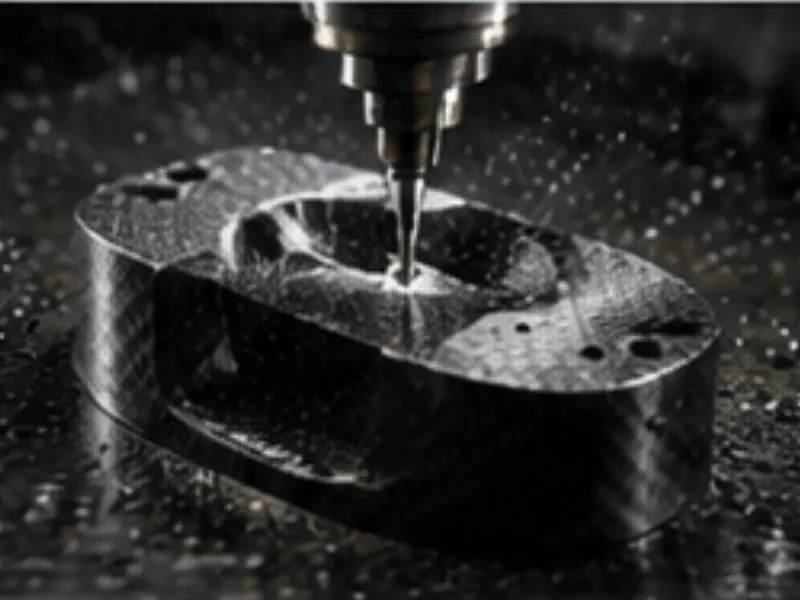
Cured laminates are trimmed and drilled on CNC machines to hold tight dimensional tolerances.
Demold
Once cooled, the vacuum bag is removed and the part is demolded. Release agents or prepared mold surfaces let the component release cleanly. Demolding must be done carefully to avoid edge damage on thin flanges. At this stage the part is “net shape minus trim” and often still oversized on edges and attachment features, because machining carbon fiber after cure is cleaner and more accurate than molding every edge perfectly.
Trim and CNC machining
Cured carbon fiber is abrasive and tends to delaminate or fray if machined poorly, so trimming is done on dedicated CNC equipment with appropriate tooling, speeds, and dust extraction. Edges are cut to final contour, holes are drilled or routed, and bonded inserts may be installed. This stage is where dimensional tolerance is actually achieved, and it is a core part of our CNC machining of carbon fiber parts capability. Poor machining causes the very defects a good laminate avoided.
Inspection
Finished parts are inspected against the drawing. Visual checks catch surface defects; dimensional checks use CMM or fixtures; more demanding programs use ultrasonic or tap testing for internal voids and delamination. The inspection level scales with application: a cosmetic cover gets a visual pass, while an aerospace bracket may get full non-destructive evaluation. Our aerospace carbon fiber parts manufacturer work follows the strictest of these regimes. The table below summarizes the typical flow.
| Stage | Key Control | Common Defect if Skipped |
|---|---|---|
| Freezer storage | Temperature log, out-life | Premature resin advance |
| Cutting/kitting | Ply orientation labels | Mis-laid fiber direction |
| Layup | Wrinkle-free contact | Bridging, trapped air |
| Vacuum bagging | Leak-tight seal | Voids, dry spots |
| Autoclave cure | Ramp/hold profile | Incomplete cure |
| Demold | Gentle release | Edge chipping |
| CNC trim | Correct tooling | Delamination, fraying |
| Inspection | Dimensional + NDE | Escape of defects |
From process to program
Knowing the sequence helps you ask suppliers the right questions. Ask about freezer traceability, bagging procedure, cure validation, and inspection method. These reveal whether a shop controls quality or hopes for it. The same workflow underlies every part we ship, from UAV components to robotics links, and it is the backbone of our carbon fiber manufacturing services.
If you want the financial side of this workflow, our cost driver guide explains where the money goes at each step, and our prepreg vs wet layup comparison shows how process choice reshapes the sequence.
A disciplined, repeatable manufacturing sequence is what turns carbon fiber from a promising material into a reliable production component. Every gate matters.
Environmental controls in the layup area
Laminate quality depends on the room as much as the material. Temperature and humidity are controlled because prepreg tack and resin flow change with conditions, and airborne dust becomes a permanent inclusion defect. Clean layup areas, often with filtered air and controlled access, prevent contamination that would otherwise require scrap or repair. This discipline is part of why a professional shop’s parts outperform garage builds, and it connects to the surface finish quality buyers ultimately see.
Process documentation and first-article qualification
Before volume production, a first-article process validates the tool, layup plan, cure cycle, and inspection method against the drawing. Results are recorded as a baseline, and subsequent parts are compared to it. For aerospace and automotive programs, this qualification is contractual. Our aerospace carbon fiber parts manufacturer work treats first-article qualification as non-negotiable, because it is the moment where design intent meets manufacturability and where hidden issues are caught cheaply rather than in the field.
Rework and repair of defects
Not every defect means scrap. Minor surface voids can be filled and refinished; small delaminations at non-critical edges may be bonded. But structural defects in load paths demand scrap or qualified repair, and that judgment requires trained inspection. A shop’s repair policy should be transparent: what is repairable, what is rejected, and how repairs are documented. Understanding this beforehand prevents disputes at delivery and protects both parties when a borderline part appears.
Scaling from prototype to production
The same part made once and made a thousand times faces different risks. Prototypes tolerate hand-finishing and relaxed cycle times; production demands repeatability, yield, and throughput. Scaling often means moving from manual layup to assisted or automated processes, adding fixtures, and tightening inspection sampling. Our carbon fiber prototyping services deliberately design prototypes so they scale, avoiding beautiful one-offs that cannot be repeated economically. This forward-looking view is what keeps unit cost predictable as volume climbs.
Quality records that travel with the part
Modern programs expect a pack of records: material certs, cure logs, dimensional reports, and inspection results. These travel with the part through assembly and service, enabling traceability if a field issue arises. Buyers should specify which records they need at quote time, because capturing them is cheaper when built into the workflow than reconstructed afterward. This is especially true for motorsport carbon fiber parts where race-to-race traceability is expected.
Why every gate matters to the buyer
Each step in the sequence protects a different property: freezer control protects resin life, kitting protects fiber direction, layup protects strength, bagging and cure protect density, machining protects tolerance, and inspection protects the customer. Skipping or weakening any gate does not just risk one bad part; it risks a pattern of inconsistency that surfaces only after assembly or in service. Understanding the chain helps buyers write better specifications and choose suppliers whose discipline matches the part’s importance.
Want a walkthrough of how your specific part would move through our line? Email [email protected] and we will map the process, tooling, and inspection plan for your program.
Prepreg resin is partially cured and continues to advance at room temperature, eventually becoming unusable. Freezing near minus eighteen degrees halts that progression. Each roll is tracked for out-life so material is thawed, used, and cured within its usable window.
The autoclave applies controlled heat and pressure. Heat completes the resin cross-link while pressure compacts the laminate and forces trapped air to the surface, producing a dense, low-void part with high fiber volume fraction.
Cured carbon fiber machines more cleanly and accurately than it molds at thin edges. CNC trimming achieves tight tolerances and clean holes without the delamination and fraying risk of expecting net-molded precision on every feature.
Inspection scales with application. Covers get visual checks; structural parts add CMM dimensional verification and non-destructive methods such as ultrasonic or tap testing to detect internal voids and delamination before shipment.