Carbon Fiber Mold Making Service
A carbon fiber mold making service is the foundation of every repeatable composite part, because the mold dictates the surface, the dimensional envelope, and the rate at which you can produce. A poorly made tool leaks vacuum, transfers orange-peel texture, or warps the part under cure heat, and those defects multiply across every unit it makes. Since 2005 TechCarbonWorks has built composite, aluminum, and steel tooling for customers in the United States, Europe, and Australia, combining CNC plug machining, surface engineering, and vacuum testing so the mold you receive is production-ready on day one.
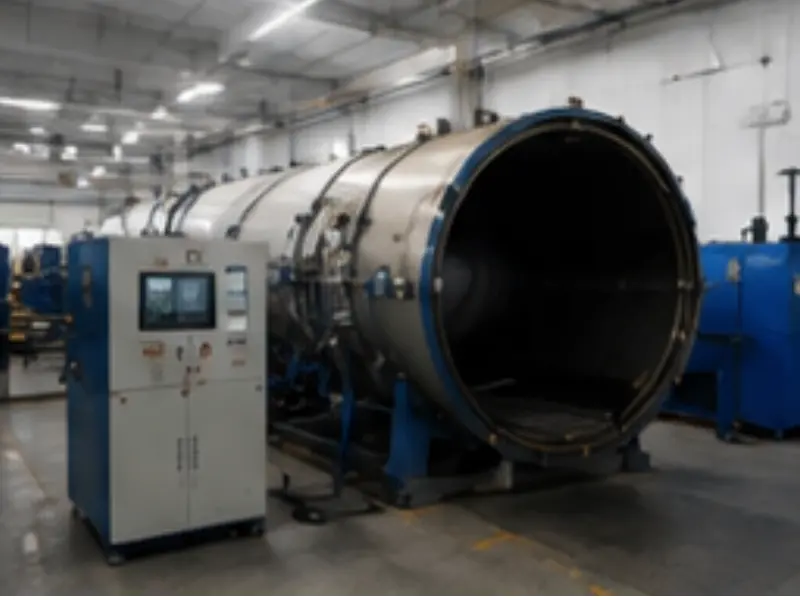
Autoclave curing of carbon fiber components inside precision composite tooling built by our mold shop.
Why the Mold Defines the Part
In metalworking the machine largely defines accuracy; in composites the mold does. The cavity surface becomes the part’s A-side, the flange defines the bag seal, and the tool’s stability under heat determines whether a thousand parts all measure the same. Our carbon fiber mold making service therefore treats tooling as a precision product in its own right, engineered for the cure cycle, the resin system, and the production volume you actually need.
Pattern and Plug Machining
Every mold starts with a pattern, or plug, that is the positive shape of your part. We machine plugs on 3-axis and 5-axis CNC centers from stabilized tooling board or aluminum, holding the master geometry tighter than the final part tolerance because every error in the plug is inherited by every mold made from it. The plug is finished, filled, and sealed so the subsequent mold releases cleanly. For complex curvature we use 5-axis positioning to reach compound surfaces in a single setup, avoiding the step lines that multi-setup 3-axis work leaves behind.
A well-machined plug is the cheapest insurance in the whole program: it is where dimensional intent is locked in before any composite is laid.
Plug Material Selection
We choose plug material by the number of molds the plug must spawn and the surface required. Tooling board is fast and cheap for a single composite mold; aluminum is used when the plug must also act as a master for several tools or when extreme dimensional stability through temperature swings is needed. The plug face is sealed and sometimes nickel-plated for durability where many molds will be taken. Getting this choice right upfront prevents a plug that distorts mid-program and forces a costly re-cut.
Composite, Aluminum, and Steel Molds
The choice of mold material is a trade between cost, cure temperature, and expected life.
- Composite molds: Built from a gelcoated fiberglass or carbon toolface over a stiffened backing. They are economical, fast to make, and expand thermally close to the carbon part, reducing warpage. Ideal for prepreg and vacuum-bag production up to hundreds of parts.
- Aluminum molds: Machined from solid aluminum for excellent heat transfer and longer life into the low thousands of parts. They suit higher cure temperatures and faster cycle times where thermal mass helps.
- Steel molds: Used for the highest temperatures, pressures, and longest runs into the tens of thousands. Most expensive to machine but unmatched in durability for high-rate programs.
| Mold Type | Lead Time | Max Temp | Typical Life | Best Use |
|---|---|---|---|---|
| Composite | 1-3 weeks | Moderate-high | Hundreds | Prepreg, bridge runs |
| Aluminum | 2-4 weeks | High | Thousands | Production, fast cycles |
| Steel | 4-6 weeks | Very high | Tens of thousands | High-rate, high-pressure |
Mold Surface Engineering
The molded part’s visible face is a direct copy of the cavity, so surface engineering is where class-A results are won or lost. We apply a tooling gelcoat to the plug, build the mold laminate with controlled fiber fraction, then polish the cavity through ascending grit sequences to a mirror finish where specified. Surface roughness is measured before release. For cosmetic parts we deliver a finish that needs no filler before paint or clear coat; for structural parts we balance surface with release durability.
Edge seals, bleeder grooves, and vent lines are integrated into the mold design so the bagging process is repeatable rather than improvised on the shop floor.
Tooling Gelcoat and Release Strategy
The tooling gelcoat is the thin surface layer that defines the part’s finish and protects the underlying laminate from the abrasion of repeated demolding. We select a gelcoat chemistry compatible with the cure temperature and resin system, then build sufficient thickness to survive many cycles while staying thin enough not to print texture. A matched release-agent system, applied in controlled layers, lets parts release without mechanical force that would score the cavity. Getting gelcoat and release right is what separates a mold that needs rebuilding after fifty parts from one that reaches several hundred.
Flange and Seal Channel Design
A mold is only as good as its bag seal. We engineer the flange width, flatness, and any integrated rubber or groove seal channel so the vacuum bag seats repeatably and the operator is not fighting leaks every cycle. Proper flange design also distributes clamping loads evenly, preventing local mold distortion that would otherwise show up as a wavy part edge. This is a detail often overlooked in low-cost tooling and is a standard part of our carbon fiber mold making service.
Thermal Expansion Matching
Carbon fiber parts have a very low coefficient of thermal expansion, while aluminum and steel expand noticeably under autoclave heat. If the mold and part disagree, the part can bind on the tool or spring out of true on cooldown. Composite tooling expands close to the carbon part, which is why it is often the safest choice for dimensionally critical components. Where aluminum or steel is required for life or pressure, we engineer clearances, control heat-up rates, and sometimes use heated tool control so the part stays dimensionally stable through the cycle. Our engineers discuss this trade with you during tool design rather than discovering it at first article.
How We Compensate in Metal Tooling
When a metal mold is the right call, we model the expected expansion at cure temperature and bias the machined cavity so that, at operating heat, it lands on the target dimension. We also manage the cooldown path: controlled, even cooling prevents one corner releasing before another and inducing residual stress. For very tight parts we may cut the mold slightly oversized and prove the as-cured dimension on first article, then adjust. This predictive approach is standard in our carbon fiber mold making service and is why metal-tooled programs still hold their envelope across a long run.
Mold Life and Maintenance
Mold life depends on cure temperature, release discipline, and handling. A maintained composite mold yields hundreds of parts before a surface rebuild; aluminum reaches thousands; steel tens of thousands. We document expected life and set refurbishment intervals at qualification, and we supply a maintenance log template with every tool. Between runs the mold is cleaned, inspected for micro-cracks or gelcoat wear, re-release-coated, and stored supported to avoid warpage. Localized gelcoat repair and periodic polish extend service life and keep the A-side consistent.
Vacuum Integrity Testing
For any vacuum-bag or infusion mold, a leak is the difference between a sound part and a voided reject. We leak-test every tool with a vacuum hold test, watching decay over a fixed interval, and on critical programs we apply pressure-decay or tracer-gas verification. Flange flatness and seal-channel geometry are verified so the bag stays tight through the entire cure. We do not ship a mold that has not passed its own integrity test, because a leaking tool fails silently and expensively in your production.
Mold Material Selection Deep-Dive
Choosing the mold material is the most consequential early decision in any tooling program, because it sets cost, lead time, cure envelope, and part count in one choice. Our carbon fiber mold making service walks customers through a structured comparison rather than defaulting to a single material.
| Mold Type | Build Cost | Lead Time | Max Cure Temp | Typical Life | Surface | Best Use |
|---|---|---|---|---|---|---|
| Composite | Low | 1-3 weeks | Moderate-high | Hundreds | Class-A | Prepreg, bridge runs |
| Aluminum | Medium-high | 2-4 weeks | High | Thousands | Excellent | Production, fast cycles |
| Steel | High | 4-6 weeks | Very high | Tens of thousands | Excellent | High-rate, high-pressure |
Composite molds win on cost and on thermal expansion match to the carbon part, which is why they are the default for prototype bridges and moderate-volume prepreg work. Aluminum earns its higher cost through superior heat transfer, longer life, and dimensional stability into the low thousands of parts, suiting programs where cycle time and repeatability matter more than the upfront saving. Steel is reserved for the most demanding high-temperature, high-pressure, high-rate programs where only metal can survive the duty and where the per-part economics justify the investment. The right answer is almost always driven by the production volume and cure cycle, not by a generic preference, and we state the rationale in the quotation.
When to Step Up Material
A useful rule we apply: stay composite until either the cure temperature exceeds the tool’s comfort, the annual volume pushes past a few hundred parts, or dimensional tolerance tightens below what a composite tool reliably holds. At that point aluminum is usually the next step, and steel only when pressure or rate demands it. Promoting material too early wastes capital; promoting too late causes scrap and rework. Our carbon fiber mold making service calibrates this exactly to your forecast.
Master Pattern CNC Workflow
The master pattern, or plug, is the positive master from which every mold is taken, so its accuracy is inherited by every part the mold ever makes. Our workflow is deliberate.
- Geometry verification: We receive your CAD and check it for draft, shut-off, and manufacturability against the intended mold type before any material is cut.
- Stock selection and stabilization: We pick tooling board or aluminum and condition it to shop humidity so it does not move after machining.
- Roughing and finishing: 3-axis or 5-axis CNC roughing removes bulk, then finishing passes hold the master tighter than the final part tolerance, because every error compounds downstream.
- Fill, sand, and seal: We fill surface defects, progressively sand, and seal the master so the mold releases cleanly and the surface reads true.
- First-off measurement: The plug is scanned or inspected against the CAD so the dimensional intent is locked before laminating begins.
For complex compound curvature we use 5-axis positioning to reach the surface in a single setup, avoiding the step lines and datum shifts that multi-setup 3-axis work introduces. A precisely machined, measured plug is the cheapest insurance in the entire program, because it is where dimensional intent is fixed before composite is ever laid.
Plug Durability for Multi-Cavity Programs
When a plug must spawn several molds or act as a long-term master, we seal and sometimes nickel-plate the face for wear resistance, and we store it in a climate-stable location. A distorted plug mid-program forces an expensive re-cut and re-qualification of every mold taken from it, so protecting the master is a core part of our carbon fiber mold making service.
Surface Engineering: Class-A Polish Steps
A class-A molded surface is won in the mold, not repaired on the part, so our polishing process is disciplined and measured.
- Tooling gelcoat application: A compatible gelcoat is applied to the sealed plug at controlled thickness to define the finish and protect the laminate.
- Mold laminate build: The toolface laminate is laid with controlled fiber fraction so it is stable and does not print weave texture.
- Coarse through fine polishing: The cavity is polished through ascending grit sequences, typically from several hundred up to micrometer-grade compounds, removing Orange-peel and micro-scratches.
- Surface roughness measurement: We measure Ra or comparable readings at defined points and confirm they meet the cosmetic target before release.
- Release system application: A matched release agent is applied in controlled layers so parts demold without scoring the cavity.
For cosmetic programs we deliver a finish that needs no filler before paint or clear coat; for structural programs we balance surface quality against release durability so the tool still survives the run. Edge seals, bleeder grooves, and vent lines are integrated during design so the bagging process is repeatable rather than improvised.
Avoiding Surface Print-Through
A common failure is fiber print-through or gelcoat sink that only appears after several cycles. We control it through gelcoat thickness, laminate fiber content, and proper cure of the tool before polishing, and we verify the as-polished cavity under raking light. This prevention is what lets our carbon fiber mold making service deliver tools that hold a class-A face across hundreds of parts rather than only on the first few.
CTE Matching Explained
Coefficient of thermal expansion, or CTE, describes how much a material grows when heated. Carbon fiber laminate has a very low CTE along the fiber, while aluminum and steel expand noticeably under autoclave heat. If the mold and the part expand at different rates, the part can bind on the tool, spring out of true on cooldown, or develop residual stress that later causes warpage.
Composite tooling expands close to the carbon part, which is why it is often the safest choice for dimensionally critical components: mold and part move together through the cure. Where aluminum or steel is required for life or pressure, we compensate by modeling the expected expansion at cure temperature and biasing the machined cavity so that, at operating heat, it lands on the target dimension. We also manage a controlled, even cooldown so one corner does not release before another and induce stress. For very tight parts we may cut slightly oversized, prove the as-cured dimension on first article, then adjust. This predictive CTE work is a standard element of our carbon fiber mold making service and is why metal-tooled programs still hold their envelope across a long run.
Mold Qualification
A mold is not shipped on appearance alone; it is qualified against the job it must do. Our qualification covers both vacuum integrity and dimensional proof.
Vacuum Drop Test
For every vacuum-bag or infusion mold we perform a vacuum hold test, pulling the cavity to the specified level and watching decay over a fixed interval. A stable hold confirms there are no flange leaks, seal-channel gaps, or through-laminate voids that would starve resin or trap air in your part. On critical programs we add pressure-decay or tracer-gas verification for extra assurance. We do not release a tool that has not passed its own integrity test, because a leaking mold fails silently and expensively in your production.
First-Article Inspection
Before a mold is accepted, we mold a first article and inspect it against the drawing: contour, wall thickness, hole position, surface, and any critical dimension. The first article proves the tool makes the part it was designed to make, and its data seeds the production inspection plan. Only after first-article acceptance is the mold released for volume, and the measured results are archived with the tool record.
Mold Storage and Maintenance Program
Mold life is set as much by care as by construction. Our carbon fiber mold making service includes a storage and maintenance program so the tool you receive keeps performing.
- Cleaning between runs: Residue, flash, and old release are removed so they cannot abrade the cavity on the next demold.
- Inspection: We check for micro-cracks, gelcoat wear, and flange flatness, logging any change from the baseline.
- Re-release and polish: Release agent is reapplied in controlled layers, and periodic polishing restores the surface.
- Localized repair: Minor gelcoat defects are repaired in place rather than tolerating them until they grow.
- Supported storage: Molds are stored on dedicated racks or fixtures, supported to avoid warpage, in a climate-stable space away from direct heat and sunlight.
We supply a maintenance log template with every delivered tool so your team can record each cycle and spot drift before it becomes scrap. A well-maintained composite mold yields hundreds of parts before a surface rebuild; aluminum reaches thousands; steel tens of thousands.
Mold Ownership and Transfer Policy for OEM Clients
For OEM customers, tooling is often a owned asset, and our carbon fiber mold making service is explicit about ownership and transfer.
- Ownership: Unless otherwise agreed, molds, plugs, and masters built to your geometry are your property once paid for, and we hold them on your behalf under a storage agreement.
- Documentation package: Each tool ships or transfers with its CAD, inspection data, maintenance log, layup and cure references, and any first-article reports, so the asset is usable by any qualified molder.
- Transfer on request: You may request physical transfer of the mold and master at any time; we pack and ship them with protection suited to the material, and we provide handling guidance to prevent transit warpage.
- Confidentiality: Your geometry and tooling details are held in confidence and not reused or disclosed, consistent with our ISO 9001 controls and your NDA terms.
- Continuity option: Many OEMs keep the tool with us for ongoing production while retaining full ownership, gaining both asset control and manufacturing convenience.
This clear ownership and transfer policy removes the ambiguity that often surrounds custom tooling and gives procurement a defensible asset on the balance sheet.
Industries Served
Our tooling supports UAV shell and arm production, aerospace brackets and fairings, motorsport bodywork and aero devices, robotics enclosures, and medical housings. Cosmetic programs demand class-A polish; structural programs demand dimensional repeatability; high-rate programs demand mold life. Our carbon fiber mold making service scales the tool specification to the real production need rather than over- or under-building it.
For the full program, visit our carbon fiber mold making service main page, and the carbon fiber manufacturing blog covers recent tooling projects. Begin with our carbon fiber manufacturing services overview or the custom carbon fiber parts manufacturer profile. Related programs: CNC machining carbon fiber parts, carbon fiber prototyping services, aerospace carbon fiber parts, motorsport carbon fiber parts, UAV carbon fiber components, and robotics carbon fiber parts.
Why TechCarbonWorks
Founded in 2005 in Dongguan, China, TechCarbonWorks is an ISO 9001 certified composite manufacturer shipping worldwide to the US, Europe, and Australia. We machine plugs, build molds, and run production under one roof, so tooling intent is never lost in a hand-off between vendors. Every mold leaves with inspection data, a maintenance log, and a clear life expectation.
Commission your production tooling by emailing [email protected] with your part geometry, resin system, and expected annual volume. We will recommend the right mold material and quote a build schedule.