Motorsport Carbon Fiber Parts Manufacturer
TechCarbonWorks is a specialist Motorsport Carbon Fiber Parts Manufacturer supplying race teams, tuning houses, and automotive engineering firms across the United States, Europe, and Australia. Founded in Dongguan, China in 2005, we understand that motorsport operates on a different clock from every other industry: the calendar is set by race weekends, not by quarterly planning. A damaged diffuser on Friday can end a campaign on Sunday, so turnaround is as important as lap time. This page explains the aero packages, body panels, and impact-zone parts we build, the carbon-kevlar hybrids that survive contact, and the quick-turn workflow that keeps cars on track.
Aero Packages: Splitters, Diffusers, and Wings
Aerodynamic components are where carbon fiber earns its place in motorsport. A front splitter manages underbody airflow and front downforce; a rear diffuser accelerates air exiting beneath the car to suction it onto the track; a rear wing generates balanced rear downforce with adjustable incidence. We manufacture these as stiff, lightweight laminates held to a precise fixture so the aerodynamic profile matches the team’s design intent. Because aero surfaces sit close to the ground, we pay special attention to edge stiffness so they do not flex under load and change the balance mid-corner. As a Motorsport Carbon Fiber Parts Manufacturer we treat the aero surface as a functional airfoil, not a decorative skirt.
Splitters and Canards
Front splitters take direct aerodynamic load and occasional contact with track debris. We build them with a tough outer skin and a stiff core, often reinforcing the mounting feet so they survive kerb strikes. Canards and dive planes are smaller add-on surfaces that tune front balance; we produce them as matched pairs with tight symmetry.
Diffusers and Underbody Trays
Rear diffusers demand internal geometry accuracy because the strakes and expansion angle define the downforce. We mold or vacuum-bag these to a controlled tool and verify the internal shape before trim. Underbody trays protect mechanicals and smooth airflow; they are usually larger flat panels where weight and stiffness both matter.
Wings and End Plates
Wings combine an airfoil core with end plates that control tip vortex. We laminate the main plane for torsional stiffness and finish end plates to a clean visual edge, since they are highly visible. Adjustable fittings are bonded in with metal inserts for repeated setup changes.
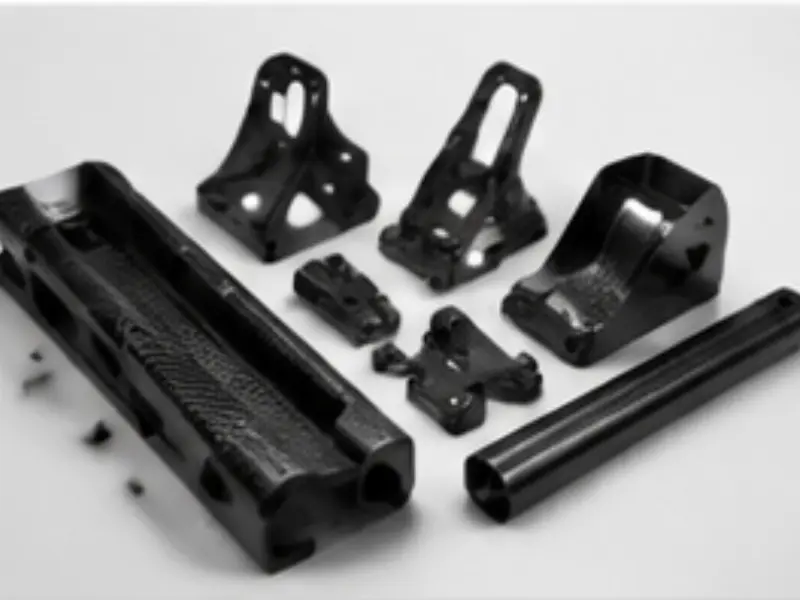
Custom carbon fiber aero components including splitters, diffusers, and wing elements built to team specifications.
Body Panels and Lightweight Structures
Beyond aero, carbon body panels replace steel and fiberglass to strip mass from the chassis envelope. Doors, hoods, fenders, and floor pans are common conversions. Each panel is laminated for the local load — a door skin needs different reinforcement than a load-bearing bulkhead — and finished to sit flush against adjoining panels. Our custom carbon fiber parts manufacturer service handles both full replacements and hybrid panels that bolt to existing metal structure. Weight reduction in the body shell also lowers the center of gravity, which helps handling as much as raw lap time.
Impact and Abrasion Zones With Carbon-Kevlar
Race parts live in hostile environments: kerb strikes, gravel, debris, and the occasional contact with a rival. Pure carbon is stiff and light but can shatter under point impact. In vulnerable areas we use carbon-kevlar hybrid fabric, where aramid fibers absorb energy and resist scuffing while carbon carries the stiffness. The kevlar layers blunt crack propagation so a scraped edge does not become a structural failure. This hybrid approach is standard practice for splitter edges, diffuser strakes, and any surface that regularly meets the track. A Motorsport Carbon Fiber Parts Manufacturer that ignores abrasion zones is shipping parts that will not finish the race.
Weight Targets and Laminate Discipline
Motorsport weight targets are unforgiving. Every kilogram removed from the car improves acceleration, braking, and cornering, and composite parts routinely cut panel mass by half versus steel. We achieve targets through disciplined laminate design: minimal ply schedules, unidirectional reinforcement only along real load paths, lightweight cores in large panels, and bonded titanium or aluminum inserts instead of heavy steel brackets. The table below shows how we match material to function.
| Component | Typical laminate | Weight strategy | Failure mode addressed |
|---|---|---|---|
| Splitter | Carbon-kevlar skin, foam core | Thin core, tough edge | Kerb scuff, flex |
| Door skin | Plain weave, thin laminate | Minimal plies | Panel shake |
| Wing plane | UD carbon, stiff core | High torsional rigidity | Aero flutter |
| Diffuser strake | Carbon-kevlar hybrid | Abrasion layer | Debris strike |
| Bulkhead | Thick quasi-isotropic | Local UD reinforce | Chassis load |
Quick-Turn Service Between Race Rounds
The defining constraint in motorsport is time. A standard production lead time of six weeks is useless when the next round is nine days away. We organize our workflow for rapid response: standing tooling for repeat programs, prioritized crash-rebuild slots, and a trim and finish cell that can turn a cured part around quickly. For existing programs we typically ship replacement aero and panels within one to two weeks, and urgent rebuilds can be expedited. Our carbon fiber prototyping services also let a team test a new aero idea between events without waiting on hardened steel tooling.
Surface Finish: Clear-Coated Twill and Matte
Appearance matters in motorsport, both for sponsors and for scrutineering presentation. We offer a clear-coated woven twill finish that shows the classic carbon weave in high gloss, a matte or satin option for a stealth appearance, and painted or wrapped surfaces for team livery. Finish is applied after cure and CNC trimming so edges stay crisp and the weave alignment reads cleanly across panels. Our CNC machining of carbon fiber parts ensures mounting holes and contours are cut precisely regardless of the final finish.
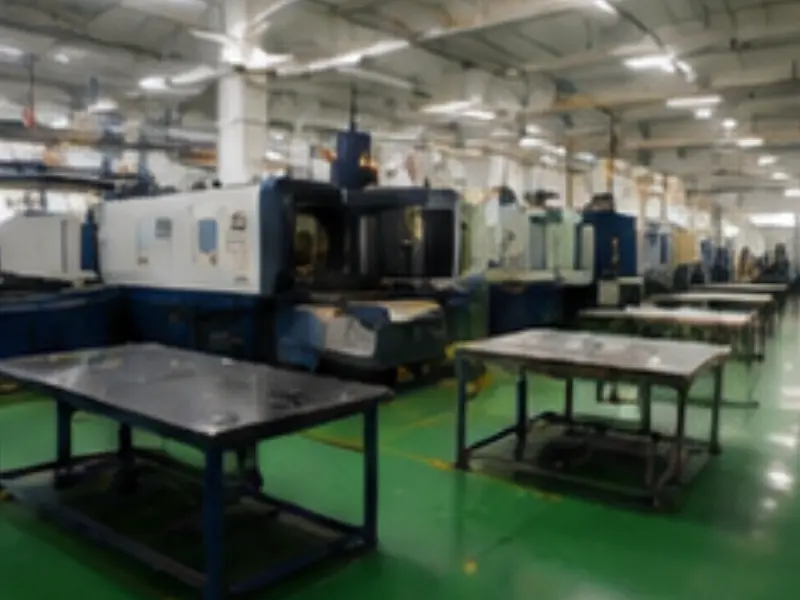
Composite production floor where motorsport aero and body parts are laminated, cured, and finished.
Mounting Strategy and Bonded Inserts
A light composite part is only as strong as the way it attaches to the car. We design the interface early: threaded inserts are bonded into localized solid laminate or potted into the core so clamp loads spread through the structure instead of crushing it. Where a part sees repeated removal for setup changes, we specify metal inserts rather than bonded nuts, because threaded metal survives far more cycles than a composite boss. Hardpoints for wing adjusters and splitter supports get the same treatment, with UD carbon wrapped around the insert to carry peel loads. A Motorsport Carbon Fiber Parts Manufacturer that under-engineers the mount will watch a perfect aero part fall off at speed.
Materials and Process Options
We run vacuum-bag oven curing for most aero and panel work, with prepreg and wet-layup options depending on volume and finish needs. Carbon-kevlar hybrids, plain and twill weaves, and a range of core materials give flexibility across a build. For teams planning ongoing production, our carbon fiber mold making service delivers hardened tooling that locks the geometry for every future part. Full details of available processes sit in our carbon fiber manufacturing services overview.
Industries and Race Applications
Our motorsport work spans circuit racing, time attack, rally and cross-country events, and EV performance conversions. The same quick-turn discipline serves prototype hypercar bodywork and one-off show cars. We also support teams who need brackets, ducting, and interior panels where weight and heat resistance matter more than aero.
Quality, Certifications, and Worldwide Shipping
TechCarbonWorks operates under an ISO 9001 quality management system, and motorsport programs receive the same inspection rigor applied to all our composite work: dimensional checks against fixtures, symmetry verification on paired parts, and finish inspection before packing. We ship worldwide, with reliable logistics to the United States, Europe, and Australia, so a team in any of those regions can receive a replacement part ahead of the next event. Documentation for critical inserts and bonded fittings is available on request.
Frequently Asked Questions
The FAQ schema above covers aero package scope, carbon-kevlar rationale, turnaround speed, finish options, weight targeting, and prototype versus production. These reflect the practical questions race engineers and team managers raise when they first scope a carbon program with us.
Talk to Our Motorsport Desk
If your team needs aero, bodywork, or impact-zone parts built to a race calendar, reach out. As a Motorsport Carbon Fiber Parts Manufacturer founded in 2005, we combine laminate discipline with the quick-turn responsiveness that racing demands. Contact [email protected] with your drawings, weight targets, or a crash-rebuild request, and we will propose a build and lead time. You can also visit our main TechCarbonWorks site and our carbon fiber manufacturing blog for more on composite aero design and finish techniques.